Thursday, October 24, 2024

The Baptized Life is Truth and it is Freedom

         V & N—today you are going to affirm your baptisms. You are taking a greater responsibility for the relationship you have with Jesus Christ

—instead of your parents or Godparents holding onto the promises of at baptism—you will be saying, 
“Yeah, that promise is true for me too… 
yeah, that is the kind of spiritual life I hope to walk with God.”

         And I want you to know something today about that Baptized life you will be confirming—affirming—
The Baptized Life is Truth and it is Freedom. 
The Baptized Life is Truth and it is Freedom.

Prayer


The Baptized Life is Truth 

         It is truth about us…

         On this Reformation Sunday, we ought to remember the opening lines of Luther’s 95 thesis:
"When our Lord and Master Jesus Christ said, 'Repent,' he willed the entire life of believers to be one of repentance.”
That doesn’t mean penitence—buying God off by being especially pious
—but being born again into the life of God
—isn’t that what our baptism is? Death and New Life!

         A life of repentance is a simple recognition that we mess us, we… to use the language from scripture: 
break relationship, sin, and are captured by forces we cannot control. 
To use Luther’s language—we’re curved in on ourselves—selfishness is plainly present in our life. 
Said another way we’re vulnerable and in need 

and so we don’t show up with our best self.

         Now, that can seem like mighty bad news, but it can be sort of freeing too… 

-Think of all the excessive time and extravagant effort people put into portraying their life as perfect
—it never is, and that’s normal. 

-Comparison—that thief of joy
—falls flat if we’re all in the same place, 
all captive to sin and cannot free ourselves.
-Even Shame is put away, 
replaced with humility and understanding
—we’re in the same boat. 


And therefore, there is good news for everyone (to quote Luther again):
“God receives none but those who are forsaken, 
restores health to none but those who are sick, 
gives sight to none but the blind, 
and life to none but the dead. 
He does not give saintliness to any but sinners, 
nor wisdom to any but fools. 
In short: He has mercy on none but the wretched 
and gives grace to none but those who are in disgrace.”


         That is the truth about God
God is gracious
—God acts first
—is giving
—is generous… 
always seeks the least, the last, and the lost…

         The whole Trinity is generous!

-In the beginning, God gave the gift of creation.

-Jesus generously joins us, God with us
—with us for his whole life and beyond.

-In the midst of dispersed and desperate disciples, 
before the church can get its act together
the Spirit speaks holiness into the Church
—and continues to do so even to this day!

         God never stops being gracious.


The Baptized Life is Freedom

         The Lutheran way of being Christian can be suspicious
—you are almost obliged to ask
—if God is the active one, 
what do we do?

         We get to abide
—dwell with God
—lean on God’s chest like a newborn, 
so that our heart beats with God.

         The good we do is done not to pay off an angry creditor, 
but out of gratitude! 
Thankfulness is our starting point; 
everything a joyous response!

         Think of it
—threats don’t get results, 
love does!

         Think of that fable of the sun and the wind
—both want a man to take off his jacket:
the wind blows and blows and all that does it tighten the man’s grip on that jacket… 
but then the sun comes out, and warms the man, until he takes off his jacket 
and basks in the sun with joy!

         So too this baptized life of ours! 
We’re free! 
We get to be Christian! 
We get to!


It is freedom!

         Freed to be disciples!

         One of the dangers of the Baptized life 
is that we can start to think of it as a sin management system… 

         It’s the idea that there is a sort of bait and switch
—God is gracious, 
then once you’re friends with God, 
God becomes a task master demanding perfection…
-sometimes this is as crass as the medieval indulgence system that Luther fought against,

-Other times it looks like the belief that God is a sort of omnipotent accountability partner,

-Or that the threat of hell is your new motivator to “be good”…

         But being a disciple of Jesus is a dynamic relationship, not a system of self-control! 
It is the ongoing unveiling of God’s love among our neighbors!

         You hear the difference, right?
One sees Christian behavior as a series of discrete habits, 
the other does things out of love of neighbor… 
“I’m not going to cheat or lie, because I’m a Christian”
is different than 
“I’m not going to cheat or lie because those things harm my neighbor… 
who God loves, and I do too!”


It is freedom!

         I’ve said it before, but I’ll say it again, 
I came to Lutheranism because of the grace, but I stick around because of Theology of the Cross
—God shows up in the opposite of where you’d expect him to show up
—the Blessed One on a cursed cross…

         The God who shows up where we least expect him!

         And that too is freeing
—we’re freed to be curious! 

         Freed to look for Christ, 
after all he’s already found us! 
Found us on the cross, born for us in the cradle. 
He comes to us in the common things…
in Christian community, 
a crust of bread and a sip of wine, 
in word and in water!

         God showing up for you in the waters of Baptism! 
That’s what you’re affirming today N, V.

         Truth about our vulnerability and need 
and Truth about God’s trustworthiness.

         Freed to dwell in the heartbeat of God, 
disciples who love like Jesus, 
always curious always seeking the one who has already found us 
in the waters of Baptism.

A+A

Saturday, October 12, 2024

The Complete Book of Job (Abridged)

Act 1: The Test

Once upon a time, there was a man named Job, the best of men—Wise and Good, and blessed for it. (Exit pulpit)


Inspector: Let me test this theory, 
let me question this system of rewards and punishments
—after all, are folk good on account of goodness, 
or good because they know they’ll be rewarded?

-Let us strike down Job’s children and wealth—does he fold?

Hmmm, lets go further still, 
let us take his health and make his spouse forsake him…

-Look he holds on even without any reward…


-Oh look, his wise friends, they sit with him, and say nothing… \

…thank God, 
sometimes people hurting, as Job hurts, need silence, 
just being with them and nothing more, the wisest thing possible, a ministry of presence.


Act 2: WITH FRIENDS LIKE THESE…

ELIPHAZ

Job: Truly, in a million different ways, in the midst of all the suffering I’ve experienced, I wish I had never been born.

Eliphaz: Hold up? You’re Job, aren’t you? You teach Wisdom’s ways to people, you have been telling folk that if they are innocent they will not suffer, haven’t you? Now that you are suffering, you’re going to renege on that proposition?

Job: Dude! You are about to make it worse, please leave your comments to yourself. You’re not helping!

Eliphaz: No, Job, let me finish. You are a wise teacher, you know that the foolish are a danger to themselves and to their relations. Haven’t you taught that a fool’s children will be crushed, just as your children were crushed? This is your teaching, now you are experiencing it firsthand.
Job: Eliphaz, do you know why you aren’t helping? Because I didn’t ask for your help, let alone ask for your wrapped up in a bow explanations of human suffering. (Unsolicited Advice is a Recipe for Resentment)

Eliphaz: Job, chill! This suffering you are experiencing is just correction.

Job: I don’t think you get how painful God’s “correction” is, how horrible it is to have your children crushed!

Suffering is so strange, you experience the pain and the horror, but also the long boring bland moments, time elongating before you forever.

At this point I just want God to finish the job he started on ol’ Job here—kill me!

Eliphaz: Be of good cheer, my friend. God will strengthen you! Surely you will recover!

Job: Why would I want to recover? To be strengthened by God? What would I have to look forward to?

Eliphaz: Like you said before this pity party of yours started, is it not right that we receive both good and bad from God? Good when you are good, and bad when you are bad.

Job: How does blaming the victim help the victim? Huh? I bet you’d kick an orphan while he’s down and think you’re doing the kid a favor!


ZOPHAR

Job: At this point, it feels like you all are just harassing me. So, let me say it plainly. God has wronged me and won’t answer for the wrong. 

Heck, to me, God is an oppressive force, an army besieging me.

Everyone sees me as a stranger.

I’m sick! Why won’t you pity me? 

God has struck me, shouldn’t that make you sad… or even afraid… you might be next!

Yet, perhaps… even in all this pain, someone will redeem me, someone will write down all these wrongs and represent me against all my accusers!

Don’t act like dispassionate scientists watching a frog getting cut up in a lab, you are next to be pithed! You will be unjustly punished just as I have been!


Zophar: You’re words shake me, friend, and I feel insulted.

It is my duty to respond as best I know how.

The wicked have a short life!

They will be ignored and forgotten!

This is because they followed the wrong path, they should have lived righteously instead of wickedly, but they didn’t, and are suffering for it!

God is sucking up all their unjust gains!

All that was taken wrongly is being taken back. 

Heaven has exposed their guilt, and by extension, your own!


Job: Oh Lord! Just listen to me Zophar, please! Just close your mouth… please… for a moment, tape it shut if you have to!

Look around at the world as it is, the wicked prosper! I don’t think you get what I’m saying. 

You think I’m proscribing things, but I’m describing them, pointing out the way the world really is. 

Don’t you get it, I’m with you, let the wicked burn! Punish the children of the wicked. May God never be late in punishing the wicked, make them suffer now! Because… 

Because… have you noticed the existential truth of it all? The wicked die and so do the righteous, and guess what, they are both dead!

I truly understand your position, good people ought to be rewarded for their goodness, and bad people ought to be punished for their badness… but open a newspaper man! The wicked prosper, no one can stop them. Making dogmatic, declarative statements to the contrary does nothing… it certainly does not comfort the suffering!


BILDAD

Job: There is injustice everywhere, but God does not act.

Bildad: Surely that is not because God is weak… for God is, ultimately, all-powerful.

No one is pure before God.

Compared to God, humans are so small.

Job: Well! Aren’t you helping the hurting with such answers.

Bildad: Well, yeah, I am! Don’t you know that God’s power subdues even chaos and death!

God’s mighty acts are so loud we can barely hear a complete word about His wonder!

Job: If God is so powerful, why won’t he give me my day in court?

I really can’t in good conscience ask for anything else. I can’t claim to be wicked, that itself would be wicked. The only right thing would be for every horror I’ve experienced to be visited upon my enemies. God will only be just if he throws all that powerful weight you talk about against those who are against me... including you three.


Act 3: God’s Response

         And after Elihu, a forth friend came and said much the same as the others, 
concluding that the LORD would not answer Job, 
the LORD answered Job out of the whirlwind:


              I suppose you know how to keep gravity constant? I suppose you can ensure that the conditions needed to support life here on earth will continue? You’re going to make sure the ozone doesn’t catch on fire, right?

              Or look up into the vast expanse. What do you know about the Winds of Venus or the atmosphere of Pluto? Can you squish together a million earths and create the sun? Have you heard the silence of space?

              Oh, Job, what do you really know about the world around you? Did you know that a shrimp’s heart is located in its head? That koala’s have fingerprints indistinguishable from humans? That Elephants are the only animal that can’t jump?

              Job, come on then, take over for me…

hold back entropy, continue to energize all of things can’t help but break down

help humans choose peace in the face of war

help them care for each other, 
when it is so much easier for them to be indifferent.


Job:      I repent! I repent…  But also, I repent of repenting, I throw dust upon dust and ash upon ash

Act 4: It is a Wonderful Life

              With that God turned to Job’s three friends, “As for you! Your Reward/Punishment style of Wisdom, is wrong, look to your friend Job, in his suffering he spoke rightly. Sacrifice, and ask Job, who was right, to pray for you.”


              And with that the three friends repented of their sins and Job interceded for them.

              And Job received back all those things that he had lost, double in fact, 

double wealth, double health, and double family.

              And they lived happily ever after.

Saturday, October 05, 2024

Sermon: Receive the Kingdom, little ones

         “Receive the kingdom of God as a little child.”

         The North-West Cluster, the portion of the New Jersey Synod that we are part of, recently began a zoom bible study series—Study Skills for Scripture
—and those of you who gathered at it last Thursday were given a treat, 
Rev. Dr. Timothy Wengert, 
(co-translator of the official translation of Lutheran confessional documents of both the ELCA and the LC-MS)

 lecturing on how Luther read scripture
—and it boils down to Law and Gospel
—that we experience scripture as telling the truth about the human condition
and telling the truth about God.

         And that is certainly true today:
         The truth about humans is that, whether we wish to admit it or not, 
we are surely little children
—vulnerable, needful, restless, lonely, empty, contingent… 
we are little ones

         The truth however, about God is that we little children have a holy parent who wishes that we receive all good things from His generous hands.

         “Receive the kingdom of God as a little child.”

Prayer


         “Receive the kingdom of God as a little child.”

         Have you ever thought about what got Jesus’ cousin, John the Baptist, locked up, and then killed? 

He questioned Herod’s divorce.

         So, “Is it lawful for a man to divorce his wife?” was no innocent question… 
it was timely, 
terrifying, 
a question with the potential to punish or worse.

         It was also a question directed one way
—how does one get rid of a wife? 
How do you throw someone away?

         One of the answers of the time was: “A man can put away his woman for any reason… yes… even for a burnt breakfast.”


         Yes, this test by the religious authorities, is dangerous to answer and devastating to any woman caught down wind of it… 
And, Jesus points out, it is hypothetical… 
“What did Moses command you?” he asks them. 
Not some question de jour, but what does this mean for you
What does this question mean for you in your flesh and blood experience? 
Why are we talking about some hypothetical
some theoretical… 
woman? 
Why aren’t we concerned about how it lands in reality

         Just as Jesus earlier interprets the Sabbath to be for humanity
not humanity for the Sabbath
—Jesus insists that rulings on Divorce, how Marriages are lived
—is about how us lonely, needful, humans 
become hewn apart or hold together… 

         They wanted a test, 
a way to throw someone away
a way to make someone into an idea
hypothetical instead of a human


         And that fits with what we humans do, right?

         I remember talking to a homeless man once, who said that the worst part about being homeless 
wasn’t the hunger or the cold, 
but that people stopped acknowledging him as a human being, 
they wouldn’t look him in the eyes. 
He’d become a thing
hypothetical
problem.

         And in many different ways, we’ve all been there… 
You’ve experienced it before, haven’t you? 
-Treated as less than, 
-casually dismissed or wrongly blamed, 
-barriers erected against you for no good reason…


         But Jesus won’t allow it! Look how he talks about us humans, 
“You’re God made!”

         Where the “even a burnt breakfast” crowd turns to Leviticus
Jesus goes all the way back
—to Genesis
You’re not trash to be thrown away, 
but a relational creature to be cherished, 
a human with a restless heart!


         One of the fun things to do when translating Genesis is to choose English words that retain the Hebrew puns
—the jokes and word play… 
and one such instance is the nature of humanity, 
the way in which we are truly part of the soil… 

In the Hebrew—We are the Adam from the Adamah
“It is not good for man to be alone” doesn’t quite get there…
“It ain’t good for the dust critter to be lonely” 
“The earthing” 
“The Groundling” 
“The Human from the Humus.”

         You in your messiness, your groundedness
—not some hypothetical someone
—but you in the world as you find it… 
grit under your nails 
and footprints where you once stood…

         You have a particularity to you! 
A unique and good center
—the image of God
—a soul even…

         Even in your vulnerability and tentativeness
—ashes to ashes and dust to dust

Ground person
from the ground
going back to the ground 
Even then… 
especially then
—you matter! 
You are not to be thrown away, 
nor are you to be barred from blessing!


         Let the little ones come
Let them be blessed by the Holy One of God.

         Just as Jesus blessed the meek and poor in spirit, 
the hungry and those who are mourning… 
just so, the women who have become a theoretical person
—a hypothetical and nothing more…

just so, these little ones… 
All of us!
You especially
you are blessed.


“Receive the kingdom of God as a little child.”

         The one whom Hebrews names as the “reflection of God’s glory” and “imprint of God’s being” receives us.

Let the little ones come.

         Jesus is not a theoretical savior, but our savior.

Let the little ones come.

         It is in Jesus that our restless hearts may find rest.

Let the little ones come.

         Human of earth, met by the God who comes down for our sake.
Let the little ones come.

         Lonely heart—now never alone, 
for God is with you
God with us—the name of our Lord!

Let the little ones come.

         You who feel unseen, know that one of the first names of God in Genesis is “The God who sees!”

Let the little ones come.

         You who are dismissed, know that God invites you, the banquet of the bridegroom is made ready for you! For you!

Let the little ones come.

“Receive the kingdom of God as a little child.”

Amen.

Friday, September 13, 2024

Two Thoughts on Practicing the Liturgy


As I’ve written elsewhere, I believe that doing the seven central things of worship shapes us as human beings; worship is practice for the rest of our lives. I was recently thinking about what mastery of these 7 central things might look like, as well as what incorrect practice might do to a person or a society.

10,000 hours

              Malcolm Gladwell famously popularized the idea that 10,000 hours of practicing a thing will lead to mastery of it. I wonder how that might apply to the central things.

In my current congregation, we have approximately 70 opportunities to worship (for roughly an hour) in a year. This means it would take nearly 143 years of regular worship to master the way of being human that we offer. That said, if you add some of the church events that contain at least a few of the central things in them, things that are worship-like, there are about 200 such opportunities a year. That would mean 50 years of regular engagement with church could lead to mastery of the seven central things.

Such a “worship-master” would project gentleness, generosity, and contentment, they would easily get over slights and have a good grasp on life’s meaning, they would have a solid sense of self-worth and be an asset to their community. I hope one day to be just such a master.

Incomplete Practice

              Now, the primary way people experience worship is not in line with the 7 central things. Instead, they practice a truncated form heavy on music and preaching. That means folk: gather, give thanks, hear the word, and are sent out. I believe such faith practices will lead to a skewed faith life outside the church doors.

              I worry about this truncated version of worship. I worry that it is producing people who are only partially formed. I worry that there are a whole lot of Christians wandering around who are experts at: community without confession, gentleness toward others without a sense of their own self-worth, and are content without being generous.

              In other words, non-denominational worship styles are training Christians to: gather together without knowing how to confess and forgive each other, be sent out into the world without understanding how being sent is connected to who they are as baptized Children of God, and give thanks without being fed with the Bread of Life.

Monday, August 19, 2024

The Politics of Joy

                 I read David Brook’s article about emotions, which he ended on a political note. It got me thinking about the buoyant shift from despair to joy that Democrats are having.

Happy Democrats

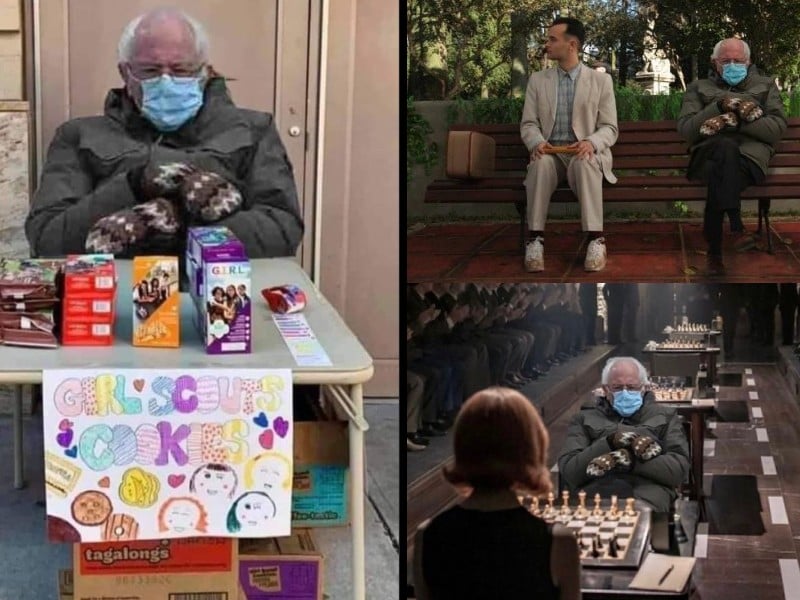
                I’ve not seen a happy Democrat since about 2014 (a friend helpfully suggested December 2012 after the Newtown shooting as the end of this politics of joy). A decade. We have 10-year-olds running around who have never seen their parents express political joy. Sure, perhaps they expressed relief in 2020, maybe they chuckled about Bernie Sander’s mittens, but that’s all they’ve seen.


                Gone those heady days. I remember canvasing for Obama throughout West Philly for both the primary and general. There was such excitement and hope. Crowds erupted for this once in a lifetime politician, charismatic and thoughtful, embodying the kind of world we hoped for. There were spontaneous moments of cross cultural and cross racial epiphanies. It was beautiful, even if a little naïve; remember when some white folk were proclaiming that we were “living in a post-racial America”?

The Emotional Shift

Governing is harder than campaigning. The Bail Out and Cash for Clunkers, the Affordable Care Act and killing Osama Bin Laden, were all accomplishments—Bin Laden is dead, Detroit is alive. It was enough to secure a second term, but they didn’t feel like unabashed victories. These policies didn’t lived up to the emotional heights on offer. The Great Recession still scarred the economy, the ACA website rollout was, to use a little Norwegian understatement, unfortunate, and terror networks became even more diverse and diffuse in response to the decapitation of al-Qaeda’s leader.

                The cautious joy of the Obama years shifted to vague disillusionment as the Republicans backed away from immigration reform, Obama was labeled “The Deporter-in-Chief” and the Democratic party was unsure how to proceed with the Trans-Pacific Partnership. Yes, there were wins, like Gay Marriage, the Paris Climate Accord, and normalizing relations with Cuba, but there was the Merrick Garland fiasco and most prominently the Clinton coronation.

                Then along came Donald Trump, with his take no prisoners and hit everything that comes within arm’s reach as hard as you can, kind of politics, not to mention how that style of politics empowered his supporters to be bullies. In the primary I watched a clutch of older women turn on one of their own when they found out she liked Marco Rubio; they suggested her husband must be a “small man” like “little Marco” until the bullied lady declared she’d go with the group and vote for Trump too. Then they all erupted in joy (say what you will about Trump’s folk in 2016, there was a type of joy at those rallies).

Campaign buses were driven off roads. Nazis invaded Charlottesville. Eventually when Trump lost in 2020 his supporters invaded the capital. These were not times of joy for anyone who wasn’t a true believer. Even in victory over Trump, there was no joy, only relief. There is a reason the things we remember about Biden’s inauguration are Bernie’s mittens and Gorman’s poem.

I don’t know the best place to point this aspect out, but there is also the reality of the emotional toll of the Pandemic years. They were a joyless time for everyone. But for liberals it was yet another indignity, being quarantined for years (and partially on account of Trump’s poor handling of the initial crisis) was hefted atop the ongoing pain of being bullied and harassed by Trump-style politics. I wonder how long the general Pandemic malaise that ended the Trump Presidency will shape our politics?

Insular fear is an incomprehensible politics

                It is worth reflecting broadly on what happened in the Trump years to the Democrats, how it shaped them to become strange joyless people. They went from happy to defensive. Remember that Hillary’s online outreach consisted of secret Facebook groups and tentative plans for pantsuit flash mobs that never materialized. After Trump was elected this insular, almost paranoid, defensiveness took hold.

It was so familiar to me; as a liberal from Wyoming, I get being careful about who you express your political affiliation to, I get how only trusting a small group of people for your political discourse can make your politics smaller than it needs to be, but also safer. I get “othering” everyone who isn’t clearly a safe person to talk politics to, because extremists on the other side are acting in genuinely evil ways… but as a liberal from Wyoming, I also know that leads to big assumptions, and you know what they say about assumptions…

Once your politics turns in on itself, even for good reasons having to do with safety, you begin to be unintelligible to the average voter, even traditional allies. For example, if an implicit understanding of Michael Foucault is required to communicate your politics, you aren’t going to be able to communicate your politics. Every shibboleth you erect for safety is another barrier for coalition building.

Joy

                And that brings me to our present moment. The big “pop in the face” Donald Trump has come up with regarding the Democratic nominee for President is ‘laffin’. And the Democrats wisely saw an opening, a way to crack open the emotional protective layers their coalition had built up during the Trump years.

They responded to Trump’s taunt by effectively saying: “Laughin’? Laughin’? Of course we’re Laughin’! There is a joy in how we want to govern. There is a joy in defeating a bully. There is joy in a forward looking vision that tackles: climate change, housing costs, and seeks to expand opportunity through affordable education and increased manufacturing in America. Joy in seeking bipartisan deals around immigration reform, the child tax credit, and prescription drug costs. Joy because we’re trying to unite the country instead of slicing and segmenting people into out groups to ostracize and bully. Joy in protecting gay and trans citizens, and clawing back women’s rights at the ballot box, even in the reddest of states, and reminding the average man that this weird internet red pill masculinity isn’t you dude!”

And this is the healthiest thing I’ve seen from either political party in years. Happy warriors win elections; a joyful movement represents America well.

Saturday, August 10, 2024

Sermon: Second Breakfast


 In the Fantasy movie, “Fellowship of the Rings” there is a scene that most people know, even if they don’t know it, because it became an internet meme.

            Two hobbits, Merry and Pippin, are dilly dallying, and Aragorn (in most films he’d be the classic hero, 
but one of the fun things about the Lord of the Rings series is that the traditional hero type plays second fiddle to a bunch of Hobbits—silly little gentlemen in waist coats), 
Mr. Hero’s hero, Aragorn, says, “Gentleman we do not stop until nightfall.”

            To which Pippin replies, “What about breakfast.”

            “You’ve already had it!”

            Pippin scoffs, “We’ve had one yes, but what about second breakfast?”

            Worried, Merry replies, “I don’t think he knows about 2nd breakfast, Pippin.”


            And this Angel of the Lord is offering a similar thing to Elijah
—you need second breakfast
you need to be hydrated again
you need two naps

             By this I mean we need to receive from God that which allows us to heal, recover, and salvage our lives from the humiliations and despair of this world….

            And also, we need to receive from God that which prepares, fortifies, and sustains us for the journey of faith…

Prayer


            The Prophet Elijah arrives at that solitary broom tree, which we read of in 1stKings, 
after an awful confrontation with the Prophets of the pagan deity Ba’al. 
He and a few of his countryman executed these pagan prophets (450 of them in total)… 
and the King and Queen respond by threatening to Execute Elijah… 
that’s why he’s run off into the wilderness.

            And he’s had enough… 
like a child caught on a carnival ride that is too much for him, 
Elijah just wants it all to end… 
“They want me dead, what if I do it myself!”

            Or perhaps he suffers from moral injury
—killing another person can wreak havoc on your soul, 
and Elijah did just order the slaughter of 450 human beings… 


            Did you know one of the most common artifacts from the Civil War are rifles stuffed full with bullets
—the majority of civil war soldiers never fired at another person, 
instead they just kept loading and loading their guns until one side ran away from the battle field… 
so you can imagine Elijah
—heart ripped to shreds over what he has done.

            Or perhaps Elijah is just dead tired
—a friend who is more into Biblical Geography than I, pointed out that when Elijah goes for runs in scripture, it is a super-hero kind of endeavor
—going like 45 miles an hour or so… 
so perhaps he’s just spent.

            Or, taking a plain reading of scripture, 
the nasty cycle of God’s people failing to be faithful is too much for him… 
he finds himself in the same place as his ancestors, 
“Why do we always find ourselves in the desert
—the wilderness?”
 
Stripped bare, out there and all alone. 
Why does this keep happening?


            We wonder that too, sometimes, right? 
When we’re exhausted, 
mentally unwell, physically sick, 
taking care of loved one, 
at our wits end, 
the end of our patience, or rope
—those times when we’re in danger of thinking poorly and make bad decisions, 
When we don’t show up as our best self
—exhaustion and despair… 
we are often not fully there
—fully present and careful.


            Now, this was a tricky sermon to write as a Lutheran,
because this incident in scripture can so easily be hijacked as mere advice about self-care.
            If I say things wrong, you all will assume that Elijah just needs to boot strap himself into wholeness… 
that this whole thing is about taking care of YOURSELF… 
do these three things and you’ll be healthy, wealthy, and wise…

            And to be clear, self-awareness and taking things slow when need be, is holy and good 
(what I said in the children’s sermon still stand)
—our body is a temple of God, 
Sabbath is a Commandment, 
and we’re made in the image of God, 
so ignoring our self can be unholy… 
but the Gospel is more than a self-help philosophy.


            The Gospel is also a blessing of human weakness
—it is calling us into our need… 
Elijah isn’t okay, and he can’t get up and eat save outside intervention
he can’t have second breakfast, or even first, save this divine messenger who cares for him!

            Elijah is stripped bare, in the desert, and he has to rely on God!

            He receives rest, food, and water to heal him in his hurt. 
He receives a second-time rest, food, and water to fortify him for the journey. 
Fortify him to encounter the very voice of God! Because you see, what happens next is he goes through thunder and fire and earthquake, 
only to find God in utter silence, 
in a still small voice
This re-affirms that God acts in the small stuff, 
blessing is found in weakness, not tumult.

            No amount of doing, of self-care, can move Elijah from despair to new life
—but Despair and New Life is surely the Goodness given to him as a gift. As Christians, we can unashamedly say that is the Gospel! God moves us from death to life!


            God feeds and frees us from despair, 
and God feeds and frees us for the journey of faith, 
a journey where we encounter God’s very voice
—God’s Word
—Jesus Christ, 
in common simple things. 

            As Luther strikingly points out, when we notice that which is necessary and nourishing for our life, we are receiving our prayed for daily bread!

            And here’s the corollary to that
—just as the common stuff of this world contains the voice of God, 
when we cease to struggle to save ourselves, 
no longer assuming that we just need to do one more thing, 
that we just need to be or do enough and despair will vanish, 
we find a new bedrock for self-care work
you are enough
because you are undergirded by the God who ALREADY loves you! 

            Not because we’ve been given a task, but because we are loved. 
Loved in our despair and loved on our journey. 
Loved through community, word and water, bread and wine—common gifts.

             And any theory of change, of transformation—of moving from despair to new life, that is worth its salt, has to go through that—love
Anti-depressants and Love! 
Cognitive Behavioral Therapy and Love! 
Regular sleep and exercise and Love! 
NA, AA, ACA, Al Anon and Love!

            People don’t change because you to-do them to death, 
people change because they have a stable loving place to begin their journey
second breakfast, hydrated againtwo naps.


            Now that Fellowship of the Rings scene has one more moment that most people miss
—as Merry and Pippin groan over their singular breakfast, 
Aragorn throws them each an apple. 
A small thing, but a sign of understanding and care.

            To close here is one final Lord of the Rings Quote, this time from the wizard Gandalf, Some believes that it is only great power that can hold evil in check. But that is not what I have found. I've found it is the small things, everyday deeds of ordinary folk that keeps the darkness at bay. Amen.


Monday, August 05, 2024

Millennials Meeting the Moment


              So, I’m watching the Foundation TV show on Apple+, and it has got me thinking a bit about historical forces, and particularly Generational Theory. I’m one of those people who read Strauss and Howe’s giant Generational Theory book back when it was in vogue. These two studied every generation of Americans from colonization to the present. They noticed a pattern of four generations that seemed to reoccur over and over again. This theory has been adopted by Church Growth folk, Political Consultants, and undergirds much of the language we use to talk about generational shifts and strife.

-One generation meets and defeats a crisis. Their ways of doing so shape how they re-set society after the crisis.

-Then the next generation who were too young to participate as adults in the crisis, take the previous generation’s reshaped society and improves it, often times softening its edges to do more than meet a crisis, but have a life.

-Then the next generation, who never knew the crisis and have experienced the boon of the new society, reacts to it, usually with a spiritual fury. Think the Great Awakenings and/or “Turn on, Tune in, Drop Out”.

-Finally, the fourth generation takes that spiritual energy and turns it into the physical and social work of dismantling the society set up by the first generation. This in turn prepares the way for the next generation to meet and defeat the next American crisis.

              Obviously there is a lot more to it than that, but that’s the broad stokes of the idea. You can see where the current living generations fit into Howe and Strauss’ system in my little chart above.

              According to Strauss and Howe there was only one break to this pattern, the Civil War. Their explanation was that the crisis broke out too soon, the generation who should have met and defeated the crisis weren’t adults when the crisis hit, as such there was an awful and bleak period in American life that almost ended our country and way of life.

              Now, since September 12th 2001, most of the Strauss-Howe people have been announcing that my generation, the Millennials, were too young when the crisis hit. We could only be foot soldiers in the War on Terror, so the Baby Boomers grasped onto the national agenda and did the changing for us. Then, when the Great Recession hit, the Strauss-Howe folk again said, “Shoot, the Millennials are too young to lead us out of this great crisis.”

              I think, the War on Terror and the Great Recession weren’t the crisis points that Millennials are fixing and rebuilding society in reaction to. Instead, I think the Crisis my generation are meeting and will meet, are the Pandemic and the Climate Crisis. It seems like the post-COVID re-set that is currently happening in society is the Millennials reshaping American norms and values to meet those twin challenges. I’m shooting from the hip on this, but just something I thought was worth sharing.

Saturday, August 03, 2024

Sermon: Hope, Unity, Freedom, Vocation, and Maturity


              Today’s reading from Ephesians is the bridge between Theology and Exhortation
—the midpoint between the idea and the deed.

              Before it Paul insists that:
the life of the Church
points the whole world
—that which is seen and that which is unseen
to the Gospel.

              After it Paul goes into detail about
how Christians ought to live together.

              And this bridge, today’s lesson, is built upon the stuff of Baptism:
Hope, Unity, Freedom, Vocation, and Maturity.

Let us pray.


              The multi-nation prisoner swap has been in the news the last few days,
and the focus has been on its complexity…
but it is worth considering quite simply the people involved.
A marine imprisoned for almost six years, two journalists sentenced for a combined 22 years, and so on.
Imagine the pent-up worry and the back and forth of despair and hope rattling around in these folk’s souls!

              Paul knew a little something of that,
that’s why Ephesians is littered with captivity language.
As Paul Scholar NT Wright reconstructs it,
the highest and lowest point of Paul’s ministry both took place in Ephesus.
For 3 and a half years he ministered to a growing gathering of Christians there…
and then the locals took notice.
They imprisoned Paul and dragged the leaders of local congregation into the Amphitheater and the whole place erupted in denunciations and beatings.
Paul could probably see the whole thing,
impotent to do much of anything.
—some of the pillars of the church in Ephesus publicly renounced their faith.

(Riff on actual persecution, instead of crying wolf)

              And Paul is again imprisoned, likely writing to some of those same folk who crumbled under pressure.
And he reminds them to have hope,
for Christ has captured captivity itself!
Have hope, even on the other side of the silencing storm of persecution,
even on the other side of failure
—there is hope!


              In the ancient world there was an assumption about the structure of the universe
—that it consisted of dualities (Antimonies)—this not that.
Jew/Gentile, Free/Slave, Man/Woman, etc.
—you can’t have one with out the other,
 and unity ought to be founded on being this, not that.

To this framing of the world Paul points to Baptism,
Being in Christ as a different foundation for the Church
—a church united in its diversity,
encompassing all those things folk think are fundamental divisions,
Unity in Diversity is “God’s multifaceted wisdom.”

              And today, the Church is Great when it is united in its diversity,
when it scrambles the antimonies we still construct as a society
—class divisions, racial categories, age brackets, political silos…
nothing shows off the Gospel like:
-political rivals kneeling at the same altar,
-elders and elementary school kids sharing about their week at coffee hour,
-poor and rich singing the same hymn,
-African American and European American at the same communion table…
one body, one Lord!


              Paul understands that these little Christian communities he’s writing to are more than Mystery Cults
—self-serving religious organizations, helping members get ahead in the world with winks and nods
—instead it is, we are, the Body of Christ.
If Paul was a chemist, he might say that Christ’s body has the property of gas,
it expands to fill the room. It seeks to go out into the world and be all in all.
Freed FROM sin, death, and the devil,
FOR the sake of our neighbors.

              As Deitrich Bonhoeffer once wrote, “The Church is the Church only when it exists for others.”
Christian Freedom is a journey that starts at from and moves to for! Freedom for others.


              Paul describes some of the roles in the Church:

Apostles: Firsthand witnesses of the Resurrection.

Prophets: Those speaking in Jesus’ name to guide the whole group.

Pastors: There to look after the church.

Teachers: Training people’s minds to focus on Christ.

              If I was Paul, I’d describe those gifts as vocations
—the spiritual aspect of all the Roles, Relationships, and Responsibilities we have.

              Then he points out that these roles are meaningful, not for their own sake,
but in so far as they build up the Body of Christ,
creating mature and loving Christians.

Our vocations ought to promote thriving and love!


              Finally, Paul warns the Ephesians about something he experienced at Corinth in spades,
communities caught under the spell of Charismatic preachers
and pushed to embrace those very divisions the world offers.
An immaturity irreconcilable with the Christian faith.

He insists the Christians in Ephesus ought to embrace maturity by being
rooted in communities of care,
where trusting Jesus
and the truth of the Gospel
are evident.


This movement from theology to praxis, idea to deed, being to doing
—are all rooted in what the Spirit is about to do through water and word for you, little Andrew!

In Holy Baptism you will be:
-captured by hope,
-united into the one body of Jesus Christ,
-freed from sin, death, and the devil for your neighbor,
-called to a baptismal vocation,
-and started on a journey toward Christian maturity. A+A