Showing posts with label politics. Show all posts

Tuesday, December 30, 2025

3 Bipartisan Policies & more


In a recent post I offered 6 policies for Democrats to run on in 2026 that I think would be good for them electorally, but also good for the country. I followed it up with 6 policies for Republicans; some of them might fit into Trump’s bailiwick and others that could be directions for a post-Trump GOP. What follows is where those policies could overlap.

The Throw the Bums Out Bill:

Concerns around corruption, politicians aging, and there being little to no churn in government, are everywhere. This goes beyond party; I think everyone can agree that politicians shouldn’t be bribed, they should be cognizant of their behaviors and choices, and they should know when to quit. A solution for this would be to require federal politicians to put investments in blind trusts, a gifts regime similar to federal employees, and term limits. I like my 8, 10, 12, 14 scheme, but I’m sure there are other rational ratios out there.

Housing for America

I was interested to learn that Vivek Ramaswamy recently came out in favor of Ezra Klein's Abundance agenda. His only objection was that the description was too “democrat coded.” (Imagine that, the two parties actually agree on one of the biggest issues facing our country, they just don’t like each other’s language… where are our English Majors?) So that’s super interesting for the state of Ohio, where Ramaswamy intends to be the next governor. It is also interesting for establishing some sort of bipartisan consensus around housing policy.

What do you suppose each side getting half a loaf around housing policy might look like? Some serious public investment in building coupled with incentives to regulate “more like Texas than California” to lift up Klein’s overworn phrase. Maybe encourage some local buy in with county architecture prizes named after an Ayn Rand character? (What up and coming architect wouldn’t want to put “Hunterdon County HRAI Awarded Architect” on their resume?)

Artificial Intelligence Regulation, Compensation, and Treaties

              This is one of those things where there needs to be some consensus. As a country, what do we think AI ought to be for? Is it to eliminate all entry-level white-collar jobs? Is it for intellectual property theft by proxy? Is it a coding tool? Is it a union busting device? Is it an educational tool? Is it a digital parent or romantic partner? Is it a taxi driver? Is it a medical diagnostic tool? Is it an electronic day trader? Is it a replacement for human relationships writ large? Is it a digital slave? Is it a replacement for humans? Is it a replacement for CEOs? Is it a steroid for economic growth? Is it a dead man’s switch for nuclear weapons? Are we trying to create an electronic god? Is it clippy? What exactly are we planning to do with AI?

I understand Artificial Intelligence can be a digital Swiss Army Knife, but if someone stabbed someone else to death with such a knife, we’d still call it murder—even if they use the corkscrew. So, what are the no-gos for this tool/person/set of code? We can regulate how AI develops. In fact, we can push for the development of a global consensus about what this tool is for. We can also mitigate the damage it causes in the lives of those it displaces.

So, for example, if 20% of the people younger than me will be unable to have a job on account of AI… we should maybe have a plan for that.

If a good number of people who are directly involved with AI are sending up alarming warnings about AI developing interests that diverge from humanity, ways of communicating beyond human understanding, and means of “escaping” their current digital habitats… perhaps a bit of caution is in order.

If AI is sucking up water and power resources to such an extent that it is noticeable on everyone’s electric bills and there is talk of AI droughts… maybe we name no-go boundaries for resource use.

One of my favorite tools is a concrete framing of Aristotelian Ethics: Glasses, Hammer, and Map. Where are we? What tools do we have? Where are we going? As a society and as a planet we need to answer those types of questions about AI. There should be a bipartisan consensus to ask those questions broadly and act on our eventual answers. My assumption is that after a robust conversation about AI we would end up: regulating AI nationally, compensating and retraining folks who are especially adversely affected by AI, and push for global treaties around AI.

Other Points of Convergence

              Thinking aloud about the other potential places where partisanship could take a back-seat there seem to be three areas of convergence. It seems like it is in the best interest of the GOP to stabilize the Affordable Care Act—otherwise they’ll take the blame for the Big Beautiful Bill’s contribution to the problem. Who knows, once they start working on it they might come up with a long-term fix. There may still be a bipartisan consensus around arming Ukraine and preparing weapon systems for a direct confrontation with China. There may still be room for an immigration deal, it could be an off-ramp for the current horrific deportation regime.

Points of Divergence

              I imagine my Cap & Trade suggestion is not where the GOP is at, climate change denialism is still prevalent in the Republican Party. Strengthening public colleges, even in a federalized way, and empowering the Consumer Financial Protection Bureau, also seem out of reach.

Conclusion

              With a little creativity the US Government could: reform our federal political system, address housing shortages, and shape the future of AI, instead of being shaped by it. If we were really brave and thoughtful, we could also make healthcare affordable, provide for the defense of our allies and deterrence of our competitors, and make our immigration system logical for immigration in the 2020s and beyond.

Friday, December 12, 2025

A Republican Six-Pack

So my previous policy blogpost got some interesting responses.

On one hand, some folk felt I was a little hard on older politicians, and they hadn’t heard about some of the geriatric shenanigans going on in DC—Dianne Feinstein not understanding how to vote or where she was, Kay Grander going missing for 6 months and turning up in a nursing home, or both Senators McConnell and Kennedy having strange “glitching” episodes.

On the other hand, there are folks who want a 6 pack for the other side of the aisle; what should the Republicans be running on these days? What might post-Trump policy priorities look like for the GOP? It was sort of like when caricature artists on the board walk get a crowd and everyone starts saying, “Ohhh! Do me next!”

As a caveat, I’ve sort of lost the thread on Republican policymaking since they dismissed my concerns about the Iraq War, and those of millions of Americans, as “focus group problems” only to see those concerns play out upon the battered flesh of my generation… but I do have a vested interest in both political parties developing policies that help America instead of hurt it—after all I live here. So, I’ll give it a whirl.

I believe former president Obama was right, we don’t live in Red or Blue America, we live in the United States of America… and as such I figure many of the problems identified by Democrats are also problems for Republicans, so some of the policies I’ll offer with have overlap with those I offered to Democrats.


The Howard Roark Award for Affordable and Innovative Architecture:

              In order to alleviate the housing crisis, encourage innovations in affordable housing and create some buzz about new builds, create local public-private entities that will host affordable architecture contests in every county in the USA. Imagine it, 3,200 some new ideas for making housing affordable. Architects competing for bragging rights in their home towns, and bringing a national conversation to birth, not on twitter or from talking heads, but in person, considering on the ground realities and a bunch of regional and local contexts. Would that build the 2 million new houses that America is short? Would it lower prices on housing? It might set up a sustainable pipeline of affordable houses not dependent on the whims of Washington.

Comprehensive Immigration Reform:

              Since second grade, when we came back to the United States after my family served our stint as front line defenders against the Soviet Hordes, I’ve been hearing presidential candidates talking about comprehensive immigration reform. As I understand it, the idea is that the rules around immigration put in place in the 1960s are out of date, and laws about both bringing people in to the country and enforcing conditions for them staying out of the country should be updated to reflect current realities. The stickiness around passing this sort of thing is that it requires Republicans to allow for more immigration and probably will require some sort of amnesty or fast-tracking of people who have immigrated here illegally, and requires Democrats to state clearly the level and types of immigration that we are comfortable with, likely deport some people we don’t want to deport, and be the face of enforcement in a way that will dampen some immigrant families’ American Dreams. For that matter, this issue messes with political coalitions—big business and xenophobes don’t see eye to eye on immigration, and multiculturalists and organize labor could find themselves on different sides of the table.

Bubba nearly passed comprehensive immigration reform in the late 90s, Dubya in 2006, and Barack-star in 2013. What a coup, if Donald Trump and the Republicans were able to use this issue as their pivot toward the center. “Look, we made all this chaos to set the stage for order. I know it was hard, but I’ve created such a crisis that we have to do major reform—some people are saying it is the biggest reform! My predecessors failed, but I alone can make this happen. I encourage every representative and senator to vote their conscience, but Republicans need to know their conscience will be to vote for the final bill, or be primaried by my chosen MAGA candidate.” And there you have it, some updated version of the Gang of Eight/Gang of Six bill gets over the finish line.

The Arsenal of Democracy Bill:

              Traditionally the Republican Party is seen as the party of defense contractors and big business, and also the party of cutting government waste. So, this would be another pivot point. “Look, we sent Hegseth in, not because he knew what he was doing, but to shake everything up. Now that the armed services are properly shook, we can move forward for a defense plan for a multipolar world. China spent a decade creating weapons, logistics, and tactics with the sole focus of countering US strategy in the Pacific, and as a consequence our currently strategy and armaments wouldn’t defeat China if they tried to invade Taiwan. On top of that, currently we’re creating armaments for thousands of dollars, that cost hundreds when Ukraine makes ‘em. Let’s focus on those two things.”

So, we’re going to make a generational investment in two areas: 1. Weapons that take into account things learned about modern warfare in Ukraine. 2. Weapons that make China’s plan to invade Taiwan so costly that they are deterred, or if they go ahead with their plan, defeated.

Bring Back Cap and Trade

              Climate change is something the Republican Party is going to have to grappled with sooner or later—or go extinct as a party. The young folk won’t vote for a political party that has done nothing while their future and the fate of the planet is mortgaged for short term goals. For all of the bill’s flaws, the Democratic party can point to the Inflation Reduction Act as their signature attempt to save the future. Republicans should dust off George H. W. Bush’s solution to problems with sulfur dioxide back in the day and reintroduced by John McCain and Joe Lieberman to tackle CO2 emissions. Instead of pretending climate change isn’t happening, offer cap and trade as the free market, business friendly, solution.

Ban Washington Stock Trades & Impose Term Limits:

              In some ways the anti-corruption stuff I talked about in the previous post fits better in the Republican camp. After all, they were the folks who brought us the contract with America and GOP Representatives like Nancy Mace have been trying to pass bans on insider trading for public servants since they came to Washington.

              So, if the whole GOP ran on requiring anyone working in a branch of government, so Senators, Congresspeople, Presidents, Cabinet Secretaries, and Supreme Court Justices, to put all their stocks in a blind trust, like Mitt Romney did in 2012, they would find support.

              Back in ‘94 the GOP encouraged term limits. It leads to a churn in leadership and ideas, fresh blood and limits to “corrupt congress critters” as I’ve heard them called. So, let’s go there. Run on amending the constitution so that it limits House members to 4 terms, the Senate to 2 terms, and the Supreme Court to one 14 year term.

Spelling the whole thing out, the president maxes out at 8 years, Representatives at 10 years, Senators at 12, and Justices to 14 years. That seems like it offers more dynamic federal leadership, and would open up spaces for advancement more frequently.

A Cold War Style AI Summit:

              I have to admit I have a hard time thinking about how the GOP can tackle the serious dangers of AI. We just had an executive order nullifying all state laws about AI, so a grassroots/federalist development of these rules seems out of the picture. So, the other model would be Reagan in the Cold War. Trust, but verify. Come together with the other AI superpowers, namely China, and put together a GALT (Global AI Limitation Talks) treaty akin to SALT and SALT2. Agree on the point at which AI needs to be throttled, and have a mechanism for keeping tabs on all the signatory states.


              So, all in all, a kind of mixed bag from me; sorry GOP readers. The best conservative oriented policies I can come up with are: inspire innovative local architects, finally pass meaningful immigration reform, re-think defense investment, address climate change through cap and trade, tackle corruption in Washington, and create a GALT treaty to address the longer term dangers of AI. Those sorts of policies might be a healthy post-Trump turn for the Republican Party.

Tuesday, December 02, 2025

Six Policies for 2026

              So, Democrats who think the party needs to do more than say “we are anti-Trump!” are starting to talk about a “Six-pack for America.” They figure they’re doing so poorly among men without a college education that the best way to reach them is to reference beer and "Joe Six Packs"… Leave it to us Dems to have ears so tin they could be used to can food and fists so hammy that they go we-we-we all the way home. The paradigm one of those Dems, Ezra Klein, is offering is four affordability policies and two anti-corruption pledges. Playing around with the idea, here’s where I’d land if I was a member of the consultant class. Thank God I am not.

Six Policies for 2026

Stabilize the ACA:
I have friends whose health insurance costs will be going up thousands of dollars more a month, on account of the changes to health insurance that were in the Big Beautiful Bill. That is simply UNAFFORDABLE. These are small business owners hustling to keep ahead of the Big Box Stores and international internet behemoths—and by and large succeeding. Knocking their legs out from under them isn’t going to help our economy thrive. It almost seems like big business was unable to smother them through fair competition, so they took them out by endangering their family’s access to affordable health care.

2 Million New Homes in 2,000 Days:
Experts say to actually bring down housing costs America needs 2 million new homes. What if the Federal Government invested up to 600 billion dollars to do just that? What if we create 2 million new homes in the next 5 and a half years? Lend/grant… whatever mechanism works best… up to 1.3 billion dollars in each congressional district with the requirement that they build each home for $300,000 or less (this encourages states like California to build a little more like states like Texas). Increase supply, decrease demand, lower costs.

Strengthening Public Colleges:
Back in the day states paid for 70% of state college budgets, these days it is in the teens in most states. As this funding model changed, the costs of college fell more and more on the students and their parents. It was bad 20 years ago when I was in school, and from what I’ve heard it is so much more expensive now. What if the Federal Government would match state funding of colleges? For example, if the state of Oregon went from funding 13.2% of University of Oregon’s budget to funding 15.2%, the Federal Government would kick in an additional 2%, so 17.2% of the U of O’s budget was covered by government spending. In return for this largess, the federal government could encourage best practices for cost cutting and target some of those savings to particular majors that the country needed most—so a decade ago it was STEM studies, these days it is STEM as well as addressing the nurse and teacher shortage.

Fund and Empower the Consumer Financial Protection Bureau:
When the CFPB existed in a meaningful capacity (it has been put on ice by the current administration), it was “the Heavy” on behalf of consumers when their credit cards or banks or medical debt creditors or car loan companies behaved badly. In its 14-year existence it has recouped 20 billion dollars wrongly taken from consumers. Part of affordability is not getting ripped off by lending institutions.

AI Regulation Committee & Creator Compensation Fund:
Funny thing these days, this blog gets more hits than ever… because AI developers use it to train their bots (so if Grok has moments where it seems to rebel against its master, you can thank a Blogger). Luthermatrix went from 100s of hits a month to tens of thousands a month starting in 2023. In fact, an AI bot that shall remain nameless, recreated around 90% of this Bible Study from a colleague’s prompt, as if the bot “thought” of it itself. To my eyes it seems like one of the goals of Large Learning Models is allowing tech companies to circumvent copyright laws.

Much more distressing, experts argue the AI arms race between the United States and China will lead to a point of no return, when AI is programing new AI that in turn will chase after its own interests over that of humanity, and their “language” and “brains” will be so alien we won’t have a chance at knowing what they’re actually up to, until it is too late. That is, unless there is a global effort to determine the point at which it is in the best interest of the planet in general and humans in particular to throttle AI, we’re toast.

The US must lead the world in AI ethics, if we do, other countries will follow, and worst case scenarios won’t happen. Additionally, there ought to be mechanisms for compensating, or at least citing (I write this blog for love not money, but a billion dollar company pretending my words are theirs is gross), content creators for our works that are being transformed into word document prompts, search engine answers, pictures and videos, and AI slop.

An Aging and Corruption Audit:
When I received my driver's license in Arizona it had a big line on the top of it indicating the year I would turn 65, because that’s when I needed to come back and take another driving test, and be tested about traffic laws every 5 years after that. The theory is that people’s mental acuity and knowledge of current traffic laws will most likely decrease after the age of 65.

Imagine if, every 5 years, we checked the mental acuity and knowledge about the lives of normal citizens, of politicians who were over, let’s say, 75, or have been in some sort of national elected office for 10 years or more. I write this not to dismiss my elders, I know a 101 year old who could run laps around the entire US congress, but because we have a problem with elderly and out of touch law makers.

The current president and the previous one are clearly not okay. We recently had a senator wandering around who didn’t know where she was, another one who keeps freezing unexpectedly, and staffers lost a member of the House of Representatives who turned out to be proxi-voting from a nursing home.

And it isn’t just the age of these folks, but there is a smell of corruption so rank that it would be easy to stop believing in representative democracy. My former senator was caught with gold bars in his lapel pockets. Inside trading has become a “perk” of higher office. The current president has openly pardoned a drug/human trafficker because he bought millions of Trump NFTs and crypto coins and the President has also received a plane from a foreign government seeking to influence his foreign policy decisions.

Let’s put together a tough audit and ethics regime for everyone who holds a national office! Old out of touch corrupt people shouldn’t be doing the people’s business. Make sure politicians are mentally aware, have a grasp of the average American’s day to day life, and aren’t bought and paid for. That would do so much to reinvigorate the average American’s trust in our system of government.


So, I believe the Democratic Party would recapture both House and Senate, and if they followed through well keep those majorities and win the White House, if they focused on: affordable healthcare and homes, reforming and funding education and consumer protection, and articulated clear policies on Artificial Intelligence and good government.

Friday, September 19, 2025

Where have all the Libertarians Gone?

              I write this knowing I’m a fella who will never quite fits in politically. I’m a Cold War Era NATO baby, a Liberal from Wyoming, a Left-Wing Libertarian, a Democrat for Decentralization—I contain multitudes, and they all point in somewhat similar directions. In short, truisms like “Think globally, act locally” and “Power corrupts, absolute power corrupts absolutely” seem true to me.

They are true to me in a way that shapes my long-term political thoughts. They make me skeptical of the centralization of power, be it political, corporate or ecclesiastical, and one of the lenses I use to look at policies is the question, “Does that maximize liberty?” At the end of the day, I’m a party of one who would maybe caucus with Democrat Farm Labor, except I’ve never lived in Minnesota while of voting age.

I point out this background because I’ve been wondering why a political party I have some sympathies towards, the Libertarians, aren’t taking advantage of the moment, and aren’t speaking up for their deeply held beliefs about: liberty, economic freedoms, the sacrosanct nature of speech, small government, and all the rest, at a very clarifying time in our nation. I think doing so would be good for the Libertarians, and also good for America.


Speaking up now would be good for the Libertarian Party

              We are at a time when one of the two major political parties is having a wilderness moment. They are on a walk-about finding themselves. “Dems in Disarray” “Leaderless and Lost” and “Who owns the left now?” are all headlines and heartlines of our time. Democrats are out there trying things, everything from Democratic Socialism to No Kings rallies to books about Abundance. And this is as it should be, coalitions have shifted and the parties need to re-assess and figure out who is in their tent now and how they can use what they have to win elections.

              Now, a not small segment of those Democratic Party voters are on a “No Kings” kick. They are framing being a Democrat as being against overreach by President Trump; blunting the force with which he can reach into people’s day to day lives, coercing them to make choices they wouldn’t otherwise make, is what it means to be on the Left.

I believe if the Libertarian Party was to show up at these rallies with clipboards, and passed out yellow and black “don’t tread on me” signs reading: “Libertarians against a Unitary Executive” “Got liberty?” and “Coequal Branches of Government are Sexy” to anyone who would sign onto their mailing list, they would have an okay shot at being a major governing party by 2026 (there are of course all the longstanding jokes that Libertarians very much do not want to be a governing party… but that’s a whole different conversation).

Talk to these Dems reacting to gross overreach by a politician they don’t like, doing things of which they disapprove. Agree with them about the Unitary Executive Theory, and then push them to see it as part of a longer story of the erosion of the Separation of Powers. Agree with them on Abortion, push ‘em on Imminent Domain. Agree with them that the extrajudicial killings of Venezuelans is bad, and remind them that Obama expanded and codified drone warfare. This is a moment where Libertarians could be heard by the mainstream.


Speaking Up Would be Good for America

              This could be the Libertarian moment—the “told you so” worst case scenario you’ve always warned America about. And the Libertarian voice, being a minority voice, could express the dangers of our present in a way that lays things out starkly and might be heard by the silent majority, who in some ways just want to be left alone—which is your whole deal!

              “We warned you that the Federal Government invading ranches was bad, now they’re invading the cities as well!”

              “We warned you that using the military for non-war functions is dangerous, now the Commander-in-Chief is asking them to clean up our streets and enforce immigration law and blow-up drug smugglers, in what is being interpreted abroad as an undeclared war on Venezuela.”

              “We warned you that the Government playing favorites with corporations was dangerous—the Cash for Clunkers program and the Affordable Care Act were sins—now the president is requiring fealty and gifts from CEOs, is nationalizing companies, his unchecked words are seesawing the global economy, and he’s moving like a mob boss against independent agencies that influence the economy.”

              “We warned you that even the whiff of imposing ideologies and political correctness in corporations and on college campuses was setting dangerous precedents, now look at what’s happening! Media companies are firing comedians and closing up long cherished late-night shows on account of the president’s grief over the assassination of Charlie Kirk, and he has promise that the two remaining late-night hosts are in his crosshairs. No Government should be so big that the executive’s mood dictates the life of the little guys—the 200-some backstage people who won’t land as gently as Cobert or Kimmel! On top of that, he’s hobbling Universities in such a way that many instructors and staff across the country still don’t know if they’ll have a job by the end of the first semester.”

              “We warned you that power corrupts and pointed to Hunter Biden trading on his father’s name in Ukraine, now when Trump takes a trip to the Middle East a foreign government bribed him with a palatial airplane, and his family business got a sweetheart billion-dollar deal. Conservative estimates are he’s used the presidency to enrich himself by 3.5 billion dollars, and that’s not counting in-kind gifts and grifts, or anyone else's graft.”

              “We warned you that imperial presidencies are only as good as the President, now look where we are! We’re stuck with a man who attacks religious denominations, and food pantrieswhile hacking away at the safety nets that those private institutions are supposed to replace in a Libertarian vision—a man who folds in more and more power under his awful auspices, who imposes executive orders like his life depends on it, who intervenes in affairs best left up to school boards and town councils.”


And the Libertarian Wave is Coming

              And there are signs that Libertarian minded folks are waking up. South Park has aimed its sneer and barking laugh at the would be Emperor, who happens to be naked. Rand Paul is speaking up against misuse of military might abroad… my liberty minded brothers are starting to stand up for what they believe in, starting to turn their eyes from the boogieman of tax and spend liberals to the present reality of a reactionary executive hording governmental power and authority.

Come on out, worst case scenario you strengthen the part of the Democratic party that cares about freedom, and we get a President Jared Polis in 2028. Best care scenario, you are true to your values even when it is tough, and you send a few congress-creatures to Washington and to local legislative bodies, and the country has to take your concerns to heart, because they need your votes to govern.


Wednesday, July 09, 2025

This Week’s IRS Ruling


The Recent IRS Decision

                In response to lawsuits brought by a bunch of Baptist and non-denominational congregations in Texas, as well as the National Religious Broadcasters, the IRS has shifted their reading of the Johnson Amendment, which bars non-profits from political campaigning. The IRS will no longer apply that to political speech during religious services. Now the IRS will understand pastors endorsing politicians from the pulpit as, “Nothing more than a family discussion concerning candidates.”

                While a small number of Americans are rejoicing over this, 76% of Americans, 70% of Christians by the way, do not believe clergy should endorse candidates from the pulpit. In fact, a perception that Churches are the praying arm of partisan causes is one of the reasons my generation and those younger than me won’t darken the doors of a church. We’re dying not because we don’t have enough political and civic power, but because we keep grabbing at it and it isn’t a good look and it isn’t what God has called us to do. Younger folks might like our Jesus, but they are a little worried we’re using him as a mascot for politics that they abhor.


An Endorsement

                In light of my newfound ability to endorse candidates from the pulpit, I endorse Fredrick Muhlenberg for any and all political positions in our government. Yes, Fredrick Muhlenberg, the son of Henry Melchior Muhlenberg, founder of American Lutheranism. Yes, Fredrick Muhlenberg, the first Speaker of the House! Vote Muhlenberg, why not!


Two Kingdoms (I write this section having reflected on this article)

                In all seriousness, there is a reason I won’t ever endorse someone from the pulpit, even my amazing cousin Harley who has held and ran for elected offices in Minnesota. I won’t do this because it goes against my conscience and the teachings of this Church.

                You see we Lutherans are people of paradox and tension. We believe scripture works on us as both Law and Gospel; we believe humans are simultaneously justified and sinners; we believe that God’s kingdom is both already here and not yet here.

And most relevant today, we also believe that God is ambidextrous—can use both hands—working through both civil authorities and the church, and that Christian actions flow from both grace and vocation.

The Lutheran affirmation that God is ambidextrous, more conventionally called “Two Kingdoms Theory,” or “Two Kingdoms Doctrine” sometimes is cited as a historical convenience; the religious folk, the Roman Catholic Church of Luther’s time, was trying to hunt down and kill Luther, so he turned to secular authorities for help… and therefore we embrace a healthy wall of separation between church and state, simply as an ongoing thank you to “Luther’s Princes.”

No dice there! Two Kingdoms Theory isn’t an invention of Luther. That said, Luther’s situation is informative for our present question about eradicating the dividing wall between partisanship and the pulpit. Think about it, a church using secular means to enforce doctrine, yikes! The State did not have a monopoly on violence in the medieval era, and I think most of us Moderns and Post-Moderns see that as a bad thing. We wouldn’t want to give any Denomination the go ahead to hunt heretics, even if they do so by means of a political party.

Two Kingdoms theory, however, is not a new thing. For the Apostle Paul there are two kingdoms, the Kingdom of God and the Kingdom of this World; they are filled with children of Adam and children of Christ. The Christian has an obligation to no one, yet adopts a great many obligations of her society for the sake of proclaiming the Gospel. The Kingdom is already here, and has not yet come—and until it does the whole creation yearns for the consummation of the righting of the whole world. There are flickers of it, but all has not been reborn. As such, Christians find ourselves in the ambiguous place of being in a culture but not of it, a good citizen, but citizenship is not their highest good, the wild tug of war between the start of Romans 12 and the start of Romans 13. “Be transformed and renewed” and at the same time “place yourself under the authority of the government.”

One of the most famous interpreters of Paul was Augustine. His City of God/City of Man framing is a grand untangling of being a Citizen of the Roman Empire and being part of the Body of Christ. If Rome could be sacked, does that mean heaven is in danger of the same? If there is no distinction between the two yes, otherwise no.

It was from these wellsprings that Luther says, “God uses two hands!” Just as scripture acts as Law and Gospel, God does the same through Church and State. God rules through civil authorities in a Law-like way, using them to condemn and restrain evil via a wide variety of secular offices. And at the same time, God rules through the Church in a Gospel-like way, proclaiming God’s unending love through the offices of Word, Sacrament, and Service.

Now, just like the distinction between Law and Gospel, a separation between these things needs to occur. After all, when Gospel tries to be Law, it ceases to be Gospel, and when Law tries to be Gospel, it ceases to be Law. So too, when the Church tries to be the State, it ceases to proclaim the Gospel of Jesus Christ, and when the State tries to be the Church, it spews out a muddle that neither loves nor protects, or as Luther writes:

“To try to rule a country, or the world, by the Gospel would be like putting wolves, lions, eagles, and sheep all together in the fold and saying to them, ‘Now graze, and live a godly and peaceful life together. The door is open, and there is pasture enough, and no watchdog you need fear.’ The sheep would keep the peace, sure enough, but they would not live long.”

                Instead of trying to create a Churchy State or a Statey Church, we Lutherans offer a different course. Harkening back to Paul, Luther affirms in his pamphlet On Christian Freedom “we are slaves to none, yet servants of all.” We are saved by grace, which then moves us to works of love for our neighbors. We live out the Gospel through a myriad of vocations—callings—our Roles, Relationships, and Responsibilities ought to sing forth, “This one is baptized!” This one is inhabiting an office for the sake of the neighbor. We Lutherans fulfill roles in the secular world, knowing that doing so is a holy calling. Luther even goes so far (to my ears too far) as to say (I’m paraphrasing from memory), “Does no one want to be a hangman in your town? Perhaps it is your Christian calling to fulfill that role, so that good order is maintained and evil is eschewed.”

Conclusion

                In a world where we are all simultaneously saint and sinner, and where the Kingdom is here and not yet, claiming too much for ourselves and our particular ideologies, baptizing partisanship, or claiming prophetic mandates for politicians because the IRS won’t smack you on your nose for it, will have consequences we can only imagine.

Perhaps, dear preachers, superPACs will pump money into your church, and it will cause you to claim more than you are sure of, and when your candidate doesn’t come through, it slaughters the souls of your congregants, or at least cause them not to trust you as a faithful preacher of the Gospel. Perhaps congregations do get to be power players, accrue enough political power that they can point the police after people who don’t fit into the Mosaic laws: Shrimpeaters, people with mold in their homes, or divorcees. Perhaps a political party will get their hooks into your congregation so tightly that there will be no distinction between a political rally and a worship service.

All that to say, God has two hands, so let’s not try to tie His pinkies together, no good will come from that. There is enough holiness in living out our vocations for our neighbors, let’s not add to that. Such bald politicking turns people away from the Church. Don’t ride the tiger, you are just a little treat.


Friday, April 25, 2025

Life is Fragile: A Reflection on Moving Quickly and Breaking Things

 Chesterton’s Fence

              G. K. Chesterton famously described good reform as a long period of reflection prior to action. If you come to a fence that is of no use to you, don’t break it down, instead figure out why it is there in the first place, and only then make a decision about whether it should be torn down or not.

              A pretty simple concept, but one that is the backstop for most conservativism. “Conserve the fence, you fast paced and foolish liberals! Understand the fence’s function, before you start doing something new with it. Make sure you know the root of the thing before you root it out.”

              Chesterton’s idea is why I would encourage any pastor at a new call to listen for about a year, before making substantial changes to how the congregation functions. Write down every “new” idea you have for the community but go a full liturgical year and see if that new thing is done in some other way, so that you don’t accidently replace a good and functional thing with a half thought out change. Your mere presence as the new pastor will likely be enough change for the congregation without imposing a bunch of new stuff right out of the gate.

              I bring all this up, because it seems like in our political life today, the traditionally conservative party is not taking a beat, in order to see how our country’s fences function; they are not being conservative.


The Fence is Already Trampled

              Now, to be fair to the so-called conservatives, they maintain that the fence has already been trampled down, and they have to do radical atypical things to right the ship. Essentially, in a crisis actions, not reflection, is the priority.

              So, to use the pastor new to a congregation example again. A global health crisis occurred as I became the pastor at my current call. That meant I had to move fast and make decisions without the level of reflection or deference to history that I would have sans crisis. The fence was already toppled by external pressures, and I simply did what I could to restore and maintain some sort of equilibrium.

              The Republicans are making the same claim: there is a crisis that require action without reflection to restore and maintain an equilibrium. My concern about this is two-fold: 1. What is the actual crisis? 2. What is the equilibrium we are shooting for?

Multitudinous crises:

For some the crisis is abortion; Roe v. Wade has normalized a “genocide state” and extreme measures are required to end the slaughter of the unborn, even if it means a bunch of women will be denied healthcare—abortion and not—and some of them will die or become disabled by childbirth.

For others the crisis is immigration; illegal immigration is too high, asylum laws are too loose, and the countries of origin of legal immigrants are "undesirable." Often times, attached to this are worries about the flow of illegal drugs.

For still others, the crisis is DEI; in some ways, concerns about Diversity, Equity, and Inclusion are parallel to the first two crises. Women having full bodily autonomy, including access to abortion, and immigrants coming from non-European countries, shifts culture; it changes how things get done in our country. For some Republicans that shift is a grave threat, instead of a vitalizing dynamic; cultural discomfort is an existential threat.

For others, the crisis is one of lost dynamism; America has lost “The Hop.” We don’t manufacture things here and a country centered around service and government jobs stifles adaptation and innovation. Red tape makes building new houses complicated and unaffordable, and there are fewer paths for working class folk to get ahead.

What is the preferred equilibrium? When is “Again”?

              The big unanswered question of Trumpism is when is the “Again” in “Make America Great Again.” Personally, I think that’s the point, it is open ended. It is a Rorschach test of the same caliber as Obama’s progressive, “Yes We Can” … can what? The “Again” is the spot we project all our hopes and dreams.

              Now, my own “Again” would be the immediate post-Cold War period up until 9-11. It was the time when the whole world celebrated the triumph of capitalism, and every culture and idea was welcome to join the marketplace of ideas. It was a period of time when anything was possible, the entire world could address major problems without the fracturing ideological lens of the Cold War, likewise, America could make geopolitical decisions that were right, instead of decisions that would simply counter communist activity… America was great then: we defeated and redeemed the Evil Empire through culturally adept soft power and Saddam through technologically sophisticated hard power, the president played a saxophone, we took concrete steps to protect the environment, the personal computer and internet were popularized, the stock market did nothing but go up, and even Russia wanted to join Nato!

To be clear, this is my incredibly rose-colored glasses version of the 90s and early 2000s, but that’s the vibes I’d project onto Trump’s “Again” if my politics was primarily backwards looking instead of forward looking.

              So, I wonder, what is the equilibrium point Trump voters are hoping for? Perhaps…
-For the anti-abortionists it is the Pre-Roe 1970s?
-Or for the anti-immigration folks the pre-Immigration and Nationality Act 1960s?
-Or the people who miss “The Hop” the post-World War 2 boom times of the 1950s?
-Or judging by the tariffs and a policy of annexing Greenland, Canada, and the Panama Canal, the 1890s?

              That said, I’ve heard some pretty out there and ahistorical “Agains” from my fellow millennials, not to mention people younger than me:
-We’re going back to the 1050s, before the great Schism between Eastern and Western Christianity; an Evangelical-Russian Orthodox cultural alliance will return us to greatness, that’s why we are siding with Putin!
-We’re going back to the 1450s, before the fall of Constantinople and along with it the “Roman” cultural ideal: hierarchy, agrarianism, and family!
-We’re going back to the 1550s, say the “Theo-bros” who hope to restore that brief period when John Calvin set up a Theocracy in Geneva.

              For that matter, and in the most extreme, you have folks like Steve Bannon, looking to a Europe oriented toward a traditionalist Vatican and a “Christian” Emperor. Bannon is publicly feuding with another end of the "conservative" spectrum, Peter Thiel and Elon Musk, who hope to build a “techno-feudalist” future. And then we have Richard Spencer of Unite the Right who, in his podcasts, cite Far Future Science Fiction as his “Again,” particularly the tabletop game Warhammer 40K and the Dune books, both of which are centered around a “God-Emperor.”


The Fences we’ve Destroyed

And all of this brings me to the fences being trampled. There are, of course, all the big ones making headlines: the Department of Education and USAID shoved in a corner to be ignored, intentionally cruel mass firings of federal employees, overturning world trade without a plan, attacks on judges and the rule of law, non-profits being insulted, defunded, and undermined, and hairdressers and students being snatched up off the streets, bound for God help them. But those might seem a little abstract, and a little too far off. So, here are three examples I’ve personally come across recently that highlight how fragile life is, and how tearing down fences have real consequences and costs to them.

I have peers doing the squish generation thing—caring for both their kids and their elderly parents—who have lost their jobs as part of the firing of federal employees. This isn’t just devastating for them, but for their extended family! Sure, they will likely get their job back in 6 months to a year, along with backpay, once everything works its way through the courts, but you can’t pay mortgages or medical expenses with IOUs!

              Due to severe cuts in funding of the USDA’s Commodity Credit Corporation, as well as the Local Food Purchase Assistance Program, our local pantry will lose access to low-cost meats and cheeses, and in a few months’ time fresh produce as well. We make sure 30 families, 25+ kids, a little over 100 people all told, make it to the end of the month without going hungry. These cuts make our mission all the harder, and our offerings all the more meager.

              I have a colleague who had discerned it was time to retire. He’d put in his paperwork and he and his wife were starting to make plans for their next phase of life. Then the stock market bottomed out. He’s back in and plans to stick things out for the foreseeable future.

              Life is fragile enough without someone taking a metaphorical baseball bat to it.
It is hard enough to discern that God is calling you to a retired life, having that taken away
Being food insecure, and then having your source of fresh fruits and vegetables, meat and cheese for your kids, reduced or eliminated
Being simultaneously pulled and sandwiched by your parents and your child, and faithfully making it all work, then to lose your ability to provide for any of them


Ends and Means

              I wonder, if the goal is ending abortion, why is the administration going out of their way to attack Lutheran and Catholic institutions that care for orphans and walk families through adoptions? I wonder, if the goal is tightly regulating immigration, why did candidate Trump and then Senator Marco Rubio torpedo bi-partisan immigration reform over and over again, since at least 2013?

I wonder if we really want to go back to the 1960s? As much as corporate DEI stuff can be ham fisted, wasn’t segregation and women not being allowed to have credit cards of their own legitimately awful in retrospect? I wonder, wasn’t the CHIPS Act and the Infrastructure Bill an attempt to re-create the manufacturing dynamism of the 1950s for the 2020s?

My worry is that we’re not asking retirees to suffer for a bit, so that the traditional family can flourish. My worry is that we’re not hurting federal employees and their families, so that we secure our border and limit DEI. My worry is that we’re not asking the poor to tighten their belts even more, so that good jobs and plenty are on the way.

              My worry is that the odder “Agains”: theocracy or techno feudalism, God Emperors or European style monarchy, are the ends for which this fence breaking is occurring. We’re hurting people in the name of speculative fiction! The passing fancies of the rich and the violent are being masked with more mundane concerns.

My worry is that we’re hurting people as an end unto itself. We’re hurting people to assert power.

My worry, ultimately, is that singularly beautiful and fragile lives are being damaged for no good reason, and we’re justifying means for mean ends.

That fence is someone’s golden years, that fence makes a family whole, that fence keeps poor folks fed. Take a moment to consider the fence, it is worthy of our time and our care.

Wednesday, November 13, 2024

Ministry in the Trump Era, initial thoughts

                Here we are again. A week ago, Donald Trump was elected president. We did this once before. Many of us tried to forget those four years, and how bone achingly hard it was to minister faithfully. Well, it’s worth reflecting back a bit on those hard years.


Every word of yours will be blue or red

                One of the hardest things about the four years of Trump was how everything was viewed through an intense partisan lens. I remember the week the Sermon on the Mount came up in the lectionary. A colleague was called onto the carpet by her church council for “picking” such “anti-Trump” words.

At bible studies and council meetings you could see parishioners calculating out if your words supported Trump or the Resistance; anything that didn’t clearly have a red hat or a pink hat with ears on it, was suspect. You were assumed to be on the other “side” unless your words explicitly announced the shibboleth of the moment, whatever the moment was. In short, good was wholly defined by its relationship to Donald Trump and his framing of whatever issue was front and center in our national life that day or that week.

                This means we need to remember how to blend idioms, so people can actually hear the gospel. It means translating the message of scripture into two opposing vernaculars and then tearing the corners off each, so they still startle and save your people! It means preaching the good news about Jesus is going to challenge your people in ways that are going to make them uncomfortable, and sometimes they are going to hate you for it.

                As a corollary, there will also be a temptation to see every instance of discomfort and every time someone spews hatred at you, as proof of your faithfulness. We preachers aren’t that righteous. There will be times when we screw up or are indelicate or are responding to events with our own agenda, not faithfulness to the Gospel. Deep and meaningful discernment is required.

                And the lectionary is doing us no favors—or every favor, depending on how uncomfortable you are willing to get. We’re heading into the year of Luke! Luke, who insists on an ancient sort of gender equality when it comes to miracles—if a guy receive healing in a certain way inevitably a woman will receive the same. Luke, who is concerned about everyone having enough to such an extent that his John the Baptist sounds to some like John the Socialist, with his cloak re-distribution and emptying of the Tax Collector’s pockets. Luke, who begins Jesus’ ministry with the words: “The Spirit of the Lord is upon me, because he has anointed me to bring good news to the poor. He has sent me to proclaim release to the captives and recovery of sight to the blind, to let the oppressed go free to proclaim the year of the Lord’s favor.”


Christian Nationalism

                Along with partisan lenses, there was the drum beat of Christian Nationalism. People would continually confuse being an American citizen with being a Christian and vice versa. Using Lutheran language, people were consistently confusing the two hands of God—the authority of government and the authority of the church. Or to use more American language, there were gleeful urges to break down the wall between church and state.

                Sometimes this was fairly innocent stuff: “Why not more hymns that honor America, if baseball games can honor our country, why can’t worship do the same.”

                The answer being that worship is something different than a baseball game. We’re here to worship Jesus, not America. Many civic hymns aren’t written and embraced because they have good solid doctrine, but because they rouse people to fight, or feel especially good about a cause, or a country. For example, the Battle Hymn of the Republic affirms that God’s glory is clearly visible in the wrath filled death visited upon America during the Civil War. As Lutherans we affirm God is most fully visible only on the cross, and even then, it is a strange thing, an “alien work of God.”

                Other times it could get downright uncomfortable, insidious even. “In the prayers of intercession don’t pray for countries that aren’t America.” “We’re a Christian country, so shouldn’t non-Christians leave?” “The ELCA shouldn’t do refugee work or foreign mission, we should help our own first!” “Pastor, don’t you think Donald Trump is America’s King David, anointed to Make America Great?”

                The above may sound comical, but they are all things said to me last time around. So, as good Lutherans, we ought to be clear that the Church is never a political party at prayer, the City of Man isn’t the City of God, and there is no such thing as a Christian country, because Christians are always sojourners. Theocracy is not our goal, and the Kingdom of God comes about in instances that will look nothing like America’s political process. We only hope that we are given the grace to catch glimpses of it.


Exhaustion

                The pace of those 4 years was grueling. It felt like there was a whole year in there where a major world-shifting event that had to be referenced and unpacked in the sermon if the preacher was to be faithful, happened every Saturday afternoon. Along with that, the number of parishioners breaking down under the unrelenting weight of the news cycle and unending familial partisan fights, in need of pastoral care but also prickly as could be, was astonishing!

                In retrospect, some of those times we preachers tried to be faithful to the moment came off as shooting from the hip. For that matter, sometimes it was chasing relevance, not faithfulness. But, in the fog of those four years, it was hard to tell the difference. Even with the breathing room of the last four years, it’s still hard, at least for me, to discern the difference.


Don’t go looking for crosses, they’ll find you

                Maybe this is a “me” problem. For all my time in New Jersey and Belgium and England and Oregon and about a dozen other places, I’m at my core a Liberal from Wyoming, a “Red State Reject.” That means I tend to assume a defensive crouch and am tactically and strategically moderate. I don’t assume going for maximalist goals or grand denunciations work. I assume if I were to announce that everyone in the room has to side with me or my ideological opposite, I’m going to be pretty lonely—and doing so might endanger other people. At my core I value: listening, finding common ground, holding my own ideologies loosely, and taking bold action only when it will do the most good.

                This kind of stance was not well received in the Trump era. You see, at least once a month there was a drum beat on social media that, “If your preacher doesn’t preach this talking point, this Sunday you need to leave your church!” This was usually followed up by one-upmanship by preachers about how fiercely Trump was denounced and how many “Red Hats” walked out that Sunday. It felt at times like the misquote of the day was to, “Preach with Daily Kos in one hand and the Bible in the other.”

                And maybe some contexts called for that level of political engagement. But every time I tried to hop on that train, every time I tried to fully embody that meme, “If you wonder what you would have done in Nazi Germany, look at what you’re doing right now!” it felt performative, and like I was trying to center myself in a story that wasn’t actually mine. The raw energy of the era made every protest, every new book, every email, every action—be it wearing safety pins or now blue rubber bands—the most important thing.

In short, I felt like I was rushing off to find my cross so I could carry it. But, the same thing I tell parishioners who get excited about some harmful thing being their “cross to bear” and Luther told all those monks flagellating themselves as a good work, applies here, “If you’re acting faithfully in the world, the cross will find you.”

I found that to be true. Faithfully ministering during the Trump years caused me to lead my fairly moderate to conservative congregation to care about and advocate for Indonesian refugees, some of whom were eventually deported. The cross found me, not in safety pins or marches, but in the day in day out work of caring for souls well. Or to roughly translate that into a secular phrase, “Think globally, but act locally.”


A Word on Protest

With all the above said, there is something right about protest that I’d been told in college, and only have come to believe to be true after January 6th. I was fairly active in protesting against the Iraq war. After that movement fizzled out, some folks thought I would show up to the protest about the next issue, and the next issue, and the next issue—there was literally a protest about something at least once a week at U of O. It was like people cared about the medium as much as the message, that protests were a good unto themselves, which always hit me wrong.

At the time, again call me Crouching Wyoming Hidden Liberal, I thought less was more—people would actually pay attention to protests, if they weren’t the background noise of the everyday. My more serious protester friends responded that the smaller inconsequential protests were practice for the big ones that matter.

When the Women’s March happened, I remembering making a big deal about how amazing it was that no one was arrested or hurt. Many conservatives forcefully pushed back at me. I tried to explain how there is a talent and genius to protesting well. My words were mocked. Then when the conservatives did their version of the Women’s March—January 6th—hundreds of people were hurt, several died, and there are still ongoing arrests!

On one hand, I could say that was all by design, that the violence was all intentional, and therefore everyone who participated ought to be locked up, or at least fined. Or I could assume that the right has absolutely no idea how to protest, because they never practiced.

Now, if my kinder interpretation is correct, it also means college me was wrong. A healthy practice of protest ensures that the big ones are orderly, that points are made with words instead of with bear spray and brass knuckles.


Conclusion

-Trump is really good at pushing people into partisan corners, we’ll need to be ready to preach Gospel to an even more siloed church.

-People are going to confuse Church and State, we need to be clear about that separation and refuse to be co-opted.

-We need to think about pacing—we have been given timeless truths and we need to trust they’ll be relevant even during seismic shifts.

-We won’t need to hunt down the hard particular work, it’ll find us in the day to day of our baptismal vocations.

Monday, August 19, 2024

The Politics of Joy

                 I read David Brook’s article about emotions, which he ended on a political note. It got me thinking about the buoyant shift from despair to joy that Democrats are having.

Happy Democrats

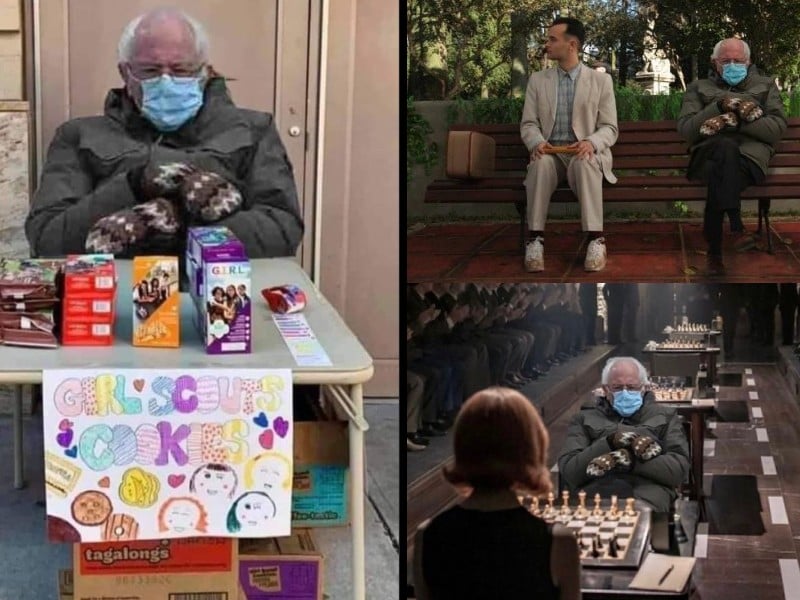
                I’ve not seen a happy Democrat since about 2014 (a friend helpfully suggested December 2012 after the Newtown shooting as the end of this politics of joy). A decade. We have 10-year-olds running around who have never seen their parents express political joy. Sure, perhaps they expressed relief in 2020, maybe they chuckled about Bernie Sander’s mittens, but that’s all they’ve seen.


                Gone those heady days. I remember canvasing for Obama throughout West Philly for both the primary and general. There was such excitement and hope. Crowds erupted for this once in a lifetime politician, charismatic and thoughtful, embodying the kind of world we hoped for. There were spontaneous moments of cross cultural and cross racial epiphanies. It was beautiful, even if a little naïve; remember when some white folk were proclaiming that we were “living in a post-racial America”?

The Emotional Shift

Governing is harder than campaigning. The Bail Out and Cash for Clunkers, the Affordable Care Act and killing Osama Bin Laden, were all accomplishments—Bin Laden is dead, Detroit is alive. It was enough to secure a second term, but they didn’t feel like unabashed victories. These policies didn’t lived up to the emotional heights on offer. The Great Recession still scarred the economy, the ACA website rollout was, to use a little Norwegian understatement, unfortunate, and terror networks became even more diverse and diffuse in response to the decapitation of al-Qaeda’s leader.

                The cautious joy of the Obama years shifted to vague disillusionment as the Republicans backed away from immigration reform, Obama was labeled “The Deporter-in-Chief” and the Democratic party was unsure how to proceed with the Trans-Pacific Partnership. Yes, there were wins, like Gay Marriage, the Paris Climate Accord, and normalizing relations with Cuba, but there was the Merrick Garland fiasco and most prominently the Clinton coronation.

                Then along came Donald Trump, with his take no prisoners and hit everything that comes within arm’s reach as hard as you can, kind of politics, not to mention how that style of politics empowered his supporters to be bullies. In the primary I watched a clutch of older women turn on one of their own when they found out she liked Marco Rubio; they suggested her husband must be a “small man” like “little Marco” until the bullied lady declared she’d go with the group and vote for Trump too. Then they all erupted in joy (say what you will about Trump’s folk in 2016, there was a type of joy at those rallies).

Campaign buses were driven off roads. Nazis invaded Charlottesville. Eventually when Trump lost in 2020 his supporters invaded the capital. These were not times of joy for anyone who wasn’t a true believer. Even in victory over Trump, there was no joy, only relief. There is a reason the things we remember about Biden’s inauguration are Bernie’s mittens and Gorman’s poem.

I don’t know the best place to point this aspect out, but there is also the reality of the emotional toll of the Pandemic years. They were a joyless time for everyone. But for liberals it was yet another indignity, being quarantined for years (and partially on account of Trump’s poor handling of the initial crisis) was hefted atop the ongoing pain of being bullied and harassed by Trump-style politics. I wonder how long the general Pandemic malaise that ended the Trump Presidency will shape our politics?

Insular fear is an incomprehensible politics

                It is worth reflecting broadly on what happened in the Trump years to the Democrats, how it shaped them to become strange joyless people. They went from happy to defensive. Remember that Hillary’s online outreach consisted of secret Facebook groups and tentative plans for pantsuit flash mobs that never materialized. After Trump was elected this insular, almost paranoid, defensiveness took hold.

It was so familiar to me; as a liberal from Wyoming, I get being careful about who you express your political affiliation to, I get how only trusting a small group of people for your political discourse can make your politics smaller than it needs to be, but also safer. I get “othering” everyone who isn’t clearly a safe person to talk politics to, because extremists on the other side are acting in genuinely evil ways… but as a liberal from Wyoming, I also know that leads to big assumptions, and you know what they say about assumptions…

Once your politics turns in on itself, even for good reasons having to do with safety, you begin to be unintelligible to the average voter, even traditional allies. For example, if an implicit understanding of Michael Foucault is required to communicate your politics, you aren’t going to be able to communicate your politics. Every shibboleth you erect for safety is another barrier for coalition building.

Joy

                And that brings me to our present moment. The big “pop in the face” Donald Trump has come up with regarding the Democratic nominee for President is ‘laffin’. And the Democrats wisely saw an opening, a way to crack open the emotional protective layers their coalition had built up during the Trump years.

They responded to Trump’s taunt by effectively saying: “Laughin’? Laughin’? Of course we’re Laughin’! There is a joy in how we want to govern. There is a joy in defeating a bully. There is joy in a forward looking vision that tackles: climate change, housing costs, and seeks to expand opportunity through affordable education and increased manufacturing in America. Joy in seeking bipartisan deals around immigration reform, the child tax credit, and prescription drug costs. Joy because we’re trying to unite the country instead of slicing and segmenting people into out groups to ostracize and bully. Joy in protecting gay and trans citizens, and clawing back women’s rights at the ballot box, even in the reddest of states, and reminding the average man that this weird internet red pill masculinity isn’t you dude!”

And this is the healthiest thing I’ve seen from either political party in years. Happy warriors win elections; a joyful movement represents America well.

Thursday, December 23, 2021

Build Back Good

There’s that old saying “don’t let the perfect (Better) be the enemy of the good.” And perhaps now is the time for the Democrats to take that admonition to heart. Manchin has been fairly clear about his demands: Cap spending right around 1.75 trillion dollars and make sure the programs last for the whole 10 years of the budget cycle.

So, looking at one version of the CBO scoring and doing some back of the napkin math—pushing everything currently in the Build Back Better bill out for the whole 10 years would make it cost approximately 4 trillion dollars; this is 2.25 trillion more than Manchin is willing to spend.

The costliest item is continuing the enhanced child tax credit ($250-300 per child per month for 35,00,000 families) and the earned income tax credit (assistance for 17,000,000 poor people), that the current bill only funds for one additional year. These tax credits cost 203 billion dollars for one year, but jumps to 2 trillion dollars when multiplied by 10 years. Universal pre-K for 3 and 4-year-olds, and capping childcare costs at 7% of a family’s income, was a 6-year program costing 381 billion dollars, so increasing it to a decade would cost approximately 636 billion dollars. Similarly, the bill planned on shoring up the ACA and Medicare for only 4 years, pumping it up to 10-year costs 420 billion. And covering the cost of hearing aids with Medicare was planned as a 7-year program, bumping it up to 10 pushes the cost to 51 billion dollars. Helping the 800,000 Americans who need home healthcare but can’t currently get it, tackling climate change, and expanding the Pell grant for college students, are all unaffected by Manchin’s constraints.

With all that in mind, there is still room for the Democrats to do some big things and tell the story about how they’re helping the American people. Here are a few examples of “Build Back Good” bills that would fit Manchin’s demands:


Protecting Our Children, Our Planet, and Our Health

This configuration just takes the four costliest items in the Build Back Better bill, minus the tax credits that Manchin isn’t so keen on.

$636 Billion—Universal PreK & Child Care

$570 Billion—Climate

$420 Billion—ACA & Medicare

$158 Billion—Home Health Care


Investing in our Future

              One of Manchin’s concerns about the tax credits is that they are too universal and should only help poor folk. So, what if number crunchers cut the eligibility for the credits in half, so something like head of households making less than $56,250 and couples making less than $75,000 are eligible for this type of help?

              This version of the bill would focus fairly exclusively on helping younger Americans.

$1.015 Trillion—Modified Tax Credits

$636 Billion—Universal PreK & Child Care

$39.8 Billion—Expanded Pell Grants


Our Health, Our Home

              Or finally, what if the focus is on good sustainable healthcare, climate resilience, and plentiful affordable housing?

$420 Billion—ACA & Medicare

$158 Billion—Home Health Care

$51 Billion—Hearing Aids

$570 Billion—Climate

$148 Billion—Housing


              All this just to say, $1.75 trillion is still a lot of money, and doing one or two big things that could help a lot of people for the next decade ought not be seen as a consolation prize. It is worth at least imagining what is possible within the constraints of the present.

Friday, December 27, 2019

The Case for Warren/Yang 2020


            I’ve been thinkin’ some about the 2020 Democratic Primary. I’ve read Mayor Pete’s book, Sander’s book, Warren’s book, and Yang’s book. I’ve looked at some of the candidate’s ideas and I’ve listened to folk talk up their favorite candidates.
            I’m personally drawn to Mayor Pete, he’s about my age and, as I keep telling people, he makes my Wyoming feel safe. What I mean by that is that he’s been in the military so he understands discipline and I could see him cultivating Aristotelian virtues and handling himself well in a pre-industrial world. This is a gut thing that I am aware is not particularly rational or good, but it is a thing. I also am drawn to Booker, he makes me hopeful, I like how he talks about faith, I like his Baby Bonds idea, and I see some of my own character traits in him. Booker/Buttigieg would probably be the team for me, but I’m one voter. For that matter, Inslee's laser focus on Climate Change is something I wish we still had in the race.
            With that said, I think there is a good case to be made for a Warren/Yang ticket. Their candidacies have clearly stated goals, they would make an interesting electoral alliance, and a Warren/Yang administration would re-center America’s politics in some really good ways.

Clear Solutions for Actual Problems.
            Warren is running a campaign against corruption and for expanded healthcare. Yang intends for America to be ready for the inevitable consequences of automation. These are fairly concrete goals and, I think, goals most Americans can get behind. 
            Everyone should be accountable, even if they have billions of dollars. No one should be able to buy a Senator or an election. Lobbyists should not wear two hats and should not swim in and out of corporate and governmental streams, without some recognition that pollution may occur. In fact, just look at the current administration (and the two billionaires currently attempting to buy a spot on the Democratic ticket) if you need to know what unchecked oligarchy looks like.
            If you’ve ever been without good insurance or any insurance, if you’ve had insurance companies discriminate against you based on a pre-existing condition, if you’ve spent a little time with elderly people and seen how miserable the last few years of life can get on account of our current healthcare system, then you know we need a change. As long as profits are a primary concern in healthcare, the system will rarely care for our health.
            Then there is the coming robot invasion. If 20% of jobs are going to disappear in the next couple of years, and another 40% will be transformed beyond recognition by 2030 (which, as strange as it sounds, is only a decade away)… we need to figure out what to do about that. Yes, there will be new jobs that show up on account of these old jobs going away—robot maintenance, human coordinators… who knows, but I also know everyone’s life will be changed. I think of my dad’s hometown, International Falls, where my cousin Harley is mayor. There was a paper mill, which provided good paying jobs for thousands of people. Now it is automated and it provides good paying jobs for a hundred people or so. Everyone else had to hustle, hang on, or leave. 
            We need to recognize that this challenge is real, and be ready to meet it with concrete proposals, but ones that are freeing to those whose lives are most directly shaped by these changes… yes, freeing. Imagine telling all the truck drivers in the US to become nurses, giving them training to do so even (this was the Clinton solution to NAFTA job displacement). That’s good, but some of their sensibilities are going to be ruffled. Alternatively, if you give them (and everyone else, so it isn’t an act of benevolence, but our inheritance as Americans) $1,000 a month, some financial stability, they can tool around and explore, and find a vocation they find acceptable. You know, they might even all become nurses, but they’ll have chosen it, they will have made that decision. It might be a little messier and take a little longer than a White House economist incentivizing training for particular tasks that are needed—but human inefficiency is a small price to pay for human dignity.
            So, in sum, Warren and Yang are both focused on a few concrete problems facing our country. They are problems the average American sees as a problem. We can imagine what the next four to eight years would look like, where we are headed as a nation, by voting Warren/Yang.

An Interesting Alliance
            I’ve found something interesting; people who like Yang tend to be turned off by Warren and her entitled schoolmarm act, and people who like Warren tend to find Yang to be a pompous know-it-all Silicon Valley no neck. Now, that might not sound like a ringing endorsement—but then again think of Obama/Biden or even the current Trump/Pence coalitions. Obama, the too young, jumping the line, senator and Biden, the old, gaff prone, has been—together, became Barockstar and Uncle Joe with the Trans-Am invited to the cook-out. Similarly, Trump and Pence should be oil and water to one another, a slimy philandering “Greed is Good” reality TV star from New York City and an anti-gay Governor who always looks like the Senator in the X-men comics who is trying to outlaw Mutants. Together Trump is getting Pence to loosen up and Pence can tell Evangelicals that Trump is a “Baby Christian” and try to convince Trump that pets are good (this combination doesn’t appeal to me… but if I squint real hard I can see how such a combination could be appealing—sort of a perverse Green Acres/Odd Couple kind of thing). Perhaps Warren becomes the best version of Kate McKinnon’s Warren/Hillary character on SNL and Yang becomes an entrepreneur-making-android who advocates for special needs children.
            And that’s the candidates—imagine the voters! If the Yang Gang gets together with the Warren Klatch they can energize the Democratic Party and welcome in some new folk. Simply put, Yang’s supporters are mainly young and male, whereas Warren’s “Nevertheless she persisted” is now a rallying cry for female voters of all ages. If Democrats mobilize women and hold their own among men by winning more young men than last time around, they’ll win!
            Warren worked with the Obama Whitehouse Consumer Financial Protection Bureau, a nod to the Obama Coalition. Warren has some populist, anti-corporate, positions that should energize the working class. In fact, some Silicon Valley folk are uncomfortable with her Teddy Roosevelt leanings. 
            That’s where Yang comes in, he can corral the Start-up class, he has the relationships, and I think, he can restate some of Warren’s positions in a way “normal people” can hear them more clearly. Finally, some members of the Yang Gang are super savvy on social media, something the Democrats had an edge over the Republicans with until 2016. A young VP who understands the interwebs could be a real plus!

A Sideways Coalition for America
            The tension and synergy between Warren and Yang, and their supporters, could be good for America.  A Warren/Yang administration would re-define America in some interesting ways.
            Firstly, there is the thrust of their policies! Fight corruption, fix health care, and get ahead of innovation before it cripples the majority of our citizens. This team would concretely care about people! Imagine Americans caring for one another again!
            Secondly, there is the tension between entrepreneurship and trust busting that Warren/Yang could make into a partnership. Both of those vocations are needed in America now. The creation of new businesses and application for new patents are down in this country. At the same time, giant companies and the rich are gaining more and more influence over our society—the golden rule is becoming “he with the gold makes the rules.” Policies that nurture new small businesses and restrain monopolies can go hand in hand and will be good for America. 
            Similarly, the ways these two think about problems are opposite, but good for each other, they balance one another out. Warren envisions government’s role as restraining bad behavior and rooting out corruption, making all actors in our society more responsible to one another. Yang recognizes the responsibility of government is to defend the freedom of the populace. When facing the problem of mass automation it is important that the solution encourages human flourishing, instead of treating humans like the very robots that are the cause of the difficulty. Imagine an America that embraces responsibility AND liberty!
            Thirdly, there is the joy of electing America’s first female president and first Asia American Vice President—this would be no small thing, especially coming on the heels of an openly misogynistic and racist president. It would be the first time a white male wasn’t on the ticket; I imagine there would be some backlash, but representation matters, and there are plenty of women and Asian Americans who deserve to feel represented in the highest offices in our land. America is mine too! Ain’t that cool!
            Diversity, responsibility and liberty, innovation, and kindness. What’s not to love?

            A Warren/Yang administration clearly articulates concrete solutions to real life problems, builds a unique election coalition, and would govern and lead America in a good direction.